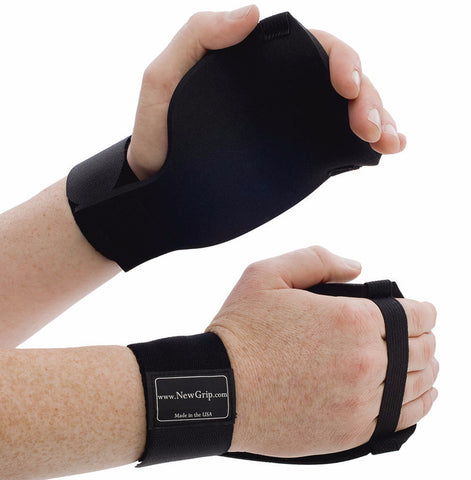
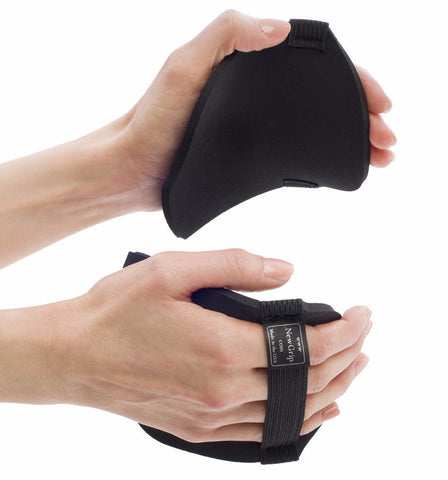
get a NewGrip... Anatomically designed for your hands.


SPECIAL REPORT: A Service of NewGrip.com. Helping you get the most of your training.

Bottom Line's Daily Health News

Soothing Your Sore Muscles
Most Popular Cures Don't Work... But Here's What Does....

It's unlikely you know what "DOMS" stands for but very likely you know well how it feels. DOMS is the acronym for "Delayed Onset Muscle Soreness" -- the pain that peaks in overused muscles a day or two after you thought it would be a good idea to exercise really hard. We used to think the culprit behind DOMS was lactic acid buildup, but now that scientists have dispelled that popular notion, I wanted to find out what does cause the soreness. Even more to the point, I sought advice about how to avoid it if possible. To get this information, I called Stephen P. Sayers, PhD, at the department of physical therapy, University of Missouri-Columbia, who has spent years researching exercise and its aftermath.

SURPRISING REASON WHY IT HURTS

Dr. Sayers first explained what's actually behind DOMS. When you exercise harder than usual or in a new way, the unusual strain creates tiny tears in the muscles, but, nope, that isn't what causes pain. (If it were, the pain would start immediately, not later.) Rather, the muscle damage puts in motion a delayed inflammatory response that releases chemicals that sensitize nerve endings -- in time these send messages to the brain that say "ouch." And it gets even more complicated. The cells that go into action to attend to the inflammation are good guys called neutrophils (white blood cells), but they generate free radicals that further damage the same muscles. Then helpful cells, called macrophages, chomp away on the inflammatory debris and stimulate healing. Yes, the system might seem a bit odd, but that's how it works and it leaves you with muscles that hurt.

The type of exercise that especially triggers DOMS is eccentric movement, which, curiously, feels the least stressful as you are doing it (running down a hill, lowering a weight, walking down stairs). To explain: When you lift a weight your biceps muscle brings it toward you and the muscle shortens -- a contraction called concentric. But as you slowly lower it and lengthen the bicep, you are making an eccentric contraction. Same thing when you are climbing stairs or hiking up terrain -- going up shortens muscles and is concentric, while going down lengthens muscles and is eccentric. Dr. Sayers says eccentric motions trigger more damage, which can lead to soreness because fewer muscle fibers are available to help eccentric actions... with fewer fibers pitching in to lighten the load, there is more stress on the muscles involved, therefore greater soreness.

DOES THIS HAVE TO HAPPEN?

So the question is, can one get fit without suffering DOMS? Some exercise professionals say no, DOMS is simply part of building strength. Dr. Sayers agrees, but says it does not have to be debilitating if you use caution. He is convinced that you can do any kind of exercise routine or sport, and suffer few if any sore muscles in the process. The key, he says, is to always start slowly and give your muscles time to gradually adjust.

Because strength training is the most frequent cause of DOMS, it is a good way to illustrate this approach. Using weights that are low enough not to overly stress your muscles, perform three sets of eight to 12 reps per exercise for your upper and lower body, three times a week on nonconsecutive days. (These rules change once you have reached a certain fitness level, as you will read in a moment.) As your muscles adjust to the weights you have been using, move up gradually to heavier weights. According to Dr. Sayers, "The greatest gains in strength seem to occur in the first eight to 12 weeks of resistance training. Gains can occur after that point of course, but they occur at a slower rate." Once you have achieved your goal, he says you can maintain it by using heavier weights and training just twice a week. Similarly when you're starting a new season's sport (skiing or tennis for example), if you haven't been working those muscles in the off season, then start gradually. Don't go from doing nothing to playing three sets of tennis... or heading out for a week of skiing the moguls.

THE WARM-UP, COOL-DOWN MYTH

The other area of chronic confusion concerns the need to warm up and cool down as a way to prevent injury to the muscles. Stretching is the usual approach to warming up, but alas, it does not prevent injury like people think it does, says Dr. Sayers, although it does enhance flexibility. A warm-up is definitely required, though, because cold muscles are vulnerable to injury. The way to do this is with a brief cardio spurt at low resistance, such as on the bike or treadmill or walking briskly for a few minutes -- anything that brings blood to your muscles, increases your body temperature and revs your metabolism slightly in preparation for the session to come. A cool-down is to reverse the body changes you put into motion with your warm-up... just continue your exercise but slow the pace. Weekend warriors planning a hike or sports outing can reduce or prevent soreness by preparing with a few eccentric movements such as squats (for quads -- using only your body weight) or sit-ups for several days beforehand. Stretching after exercise does not reduce DOMS.

Unfortunately, once DOMS sets in, there is little you can do to relieve it, though according to Daily Health News contributing editor Andrew L. Rubman, ND, a hot bath with Epsom salts is somewhat helpful.

A recent study indicated that drinking tart cherry juice, with its ample antioxidants, might be useful, but the research is preliminary, says Dr. Sayers. Plenty of studies have focused on other sorts of treatments, including acupuncture, yoga, massage, icing, stretching and vitamin C, but to little effect. Nonsteroidal anti-inflammatory drugs (NSAIDs) have been the subject of multiple studies for DOMS relief, but Dr. Sayers notes that the results are split right in the middle as to whether or not they help. He wants us to remember, however, that our body's inflammation response is important to muscle repair and it probably isn't a good idea to routinely take NSAIDs before exercise, because they might slow the inflammation that is part of repairing muscle damage.

Dr. Sayers does offer one way to feel better, though. For a quick but short-acting fix, try this: Simulate the very exercise that caused your soreness, but do it lightly, just enough to get some blood flow to the muscles and release endorphins. No, the relief you get won't last long, but for a few minutes or hours, it may feel better.

Source(s):
Stephen P. Sayers, PhD, Department of Physical Therapy, University of Missouri-Columbia.
Be well,

Carole Jackson
Bottom Line's Daily Health News

--------------------------------------------------------------------------------
Bottom Line's Daily Health News: registered trademark of Boardroom, Inc.
Copyright (c) 2007 by Boardroom Inc.

Courtesy of NewGrip.com

| Home | |SiteMap | | About Us | | Products & Pricing |  | Contact Us |